
Article Universal Health Coverage, IFPA Webinar Series
Towards Inclusive and Equitable Clinical Trials
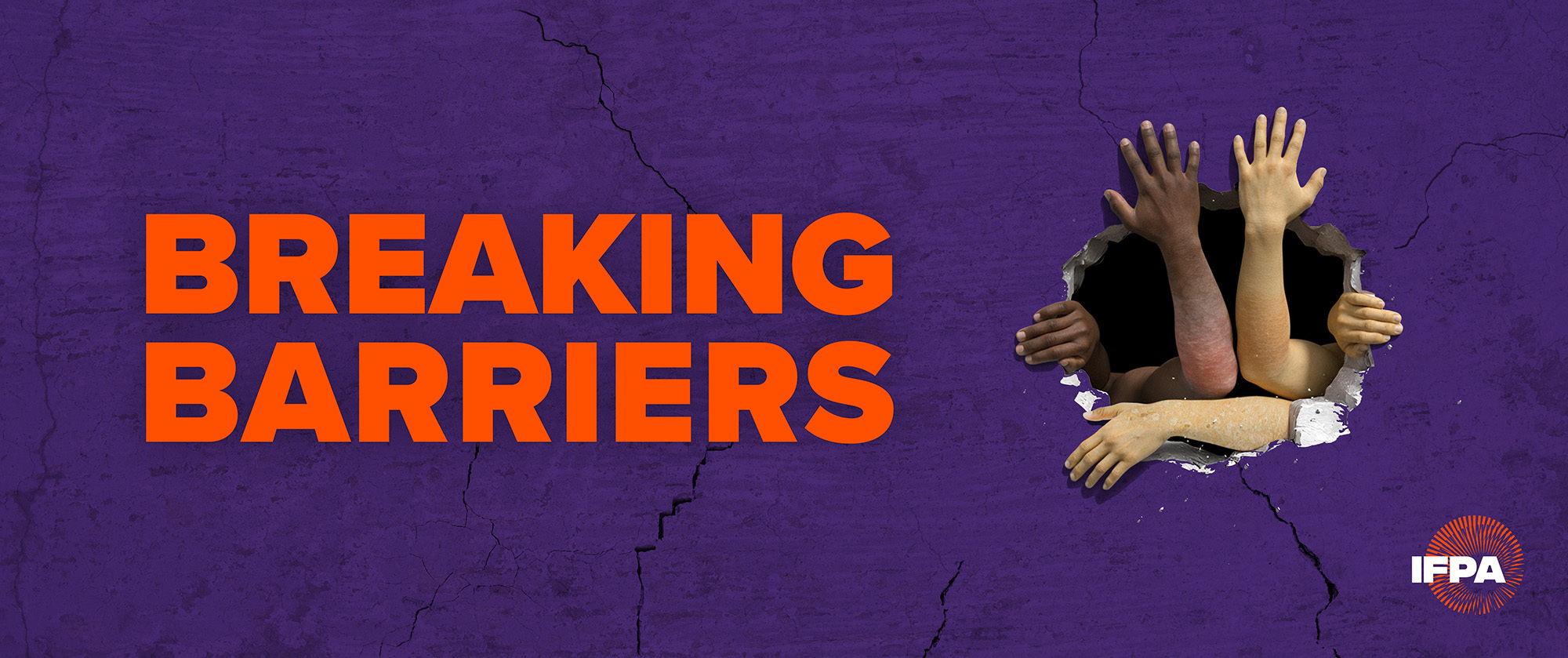
A global IFPA initiative to uncover and overcome the barriers that prevent diverse communities from participating in psoriasis research and care. We invite both people living with psoriatic disease and healthcare professionals to take part in this project.
By joining, you can share your experiences, insights, or challenges related to participation in clinical research. Your voice will help us uncover what truly stands in the way and shape a more inclusive future for everyone affected by psoriatic disease.
Diversity matters in psoriatic disease research. Yet too many communities remain underrepresented in clinical trials, limiting understanding, slowing innovation, and leaving people without equal access to effective care.
Breaking Barriers is IFPA’s new global project that explores why participation gaps persist, and how we can close them. Through collaboration among people living with psoriatic disease, researchers, and healthcare professionals, we aim to identify the social, cultural, and structural barriers that prevent inclusion in clinical research and to help remove them.
Psoriatic disease affects people of all backgrounds, but clinical research doesn’t always reflect this diversity. Factors such as ethnicity, geography, age, socioeconomic conditions, and comorbidities all shape how psoriatic disease manifests and how care is experienced.
External stigma, discrimination, and limited representation of minority groups in clinical trials deepen these inequalities. When people feel excluded or underrepresented in research, treatments risk being less effective for everyone.
Breaking Barriers seeks to:
● Reduce stigma as a barrier to participation in clinical research
● Strengthen understanding of diversity within psoriatic disease
● Empower people living with psoriatic disease to take part in research
● Support healthcare professionals in promoting inclusive research practices
● Build equitable pathways to care and treatment access globally
Throughout 2026, IFPA will work with people living with psoriatic disease, dermatologists, researchers and advocacy organizations worldwide to:
● Develop accessible educational materials about clinical research and inclusion;
● Publish articles, fact sheets and infographics addressing stigma and equity in clinical trials;
● Interviews with people living with psoriatic disease and healthcare professionals to gather lived experience data;
● Host webinars and awareness campaigns to highlight the importance of diversity in research
● Support IFPA members in adapting materials to their national and cultural contexts
This project builds on IFPA’s earlier initiative, All the Colors We Are, which celebrated diversity in psoriasis representation. Breaking Barriers takes the next step, from visibility to active inclusion in research and care.
For questions or collaboration opportunities, contact info@ifpa-pso.com
For questions or collaboration opportunities, contact
info@ifpa-pso.com
Towards Inclusive and Equitable Clinical Trials
Learn More

Breaking The Myths: Clinical trials and psoriatic disease
Before you join a study: A practical guide for participation in clinical trials
Glossary: Common terms in clinical research

Design it right: A checklist for diverse, equitable, patient-first trials

Ajith Kannangara, MD
The Skin Clinic-Galle, Patient representative Skin Sri Lanka, Sri Lanka
"As a dermatologist and patient-advocacy leader from Sri Lanka, I see firsthand how patients from low- and middle-income countries are often excluded from clinical research. Breaking Barriers matters to me because inclusive research is essential to ensure treatments are equitable, effective, and relevant for all populations."

Deepak Balak, MD
IPC Councilor, Department of Dermatology, Leiden University Medical Center, Leiden, the Netherlands
"As a dermatologist, I want to make informed treatment choices for every person living with psoriasis, irrespective of age, gender, skin color, or ethnicity. I am grateful that IFPA is leading the Breaking Barriers project to improve diversity in clinical studies. This project is an important step toward reducing healthcare disparities in psoriasis."

Fernando Valenzuela, MD, Professor
IPC Councilor, University of Chile and Probity Medical Research, Santiago, Chile
"The Breaking Barriers in Psoriatic Disease project is critical because research that lacks diversity fails both science and patients. This project is essential to ensure that evidence truly represents real-world populations and drives equitable, inclusive care worldwide."

Jensen Yeung, MD, Associate Prof.
IPC Councilor, Division of Dermatology, Department of Medicine, University of Toronto, Ontario, Canada
"Intentional efforts to enhance equity, diversity, and inclusion in clinical trial enrollment are necessary to expand access to clinical research and to ensure that trial results accurately reflect the populations most affected by disease."

Lars Werner
Director and patient organization representative, Psoriasisforeningen, Denmark
"Breaking Barriers matters because people living with psoriatic disease should have equal opportunity to participate in research and to benefit from the treatments that research makes possible. Representation is not just about fairness — it is about better evidence, better care, and better outcomes for everyone."

Mahira El Sayed, MD, Professor
IPC Board Member, Ain Shams University, Cairo, Egypt
"As a clinician, I see how unequal access to effective psoriasis treatment can lead to disability, stigma and psychological distress. I believe that access to treatment is a matter of health equity that should be supported by improving awareness, education, policy and patient empowerment. Being part of this project allows me to align my clinical experience with a broader mission, ensuring that no patient is left untreated because of where they live or what resources they have."

Robelle Tananguran
Board member and patient organization representative, PsorPhill, Philippines
"As someone who has been living with chronic autoimmune disease in the Philippines, I am saddened that there are limited treatment options for several diseases, like psoriasis. Newer therapies remain inaccessible and unavailable. We cannot doubt the importance of clinical trials in medicine research and development. But despite the advancement in technology and information dissemination, clinical trials are still a taboo and stigmatized concept for patients, family members and the community. I am participating in this project to give the perspective of the end-user -- the patient themselves. Moreover, I would like to emphasize the vital role of patient organizations and advocacy groups in eradicating the negative and false information on research and clinical trials."

Ruth Abekah
Executive director and patient organization representative, Psoriasis Ghana, Ghana
"I am happy to be part of this project because it will enable the Psoriasis Association of Ghana (Ghana) and Africa with mostly the necessary information needed for awareness, advocacy and research in our part of the world. Hence, filling the gaps in this area of study."

Raquel Vaz
Scientific Affairs Lead
Raquel is responsible for providing scientific advice and to ensure the gathering and sharing of trustworthy information to those living with psoriatic disease, healthcare providers, policy makers, and the community. Raquel has a PhD in Genetics and vast experience in clinical and translational research in rare diseases and in psoriasis.
Article Universal Health Coverage, IFPA Webinar Series
Towards Inclusive and Equitable Clinical Trialstool Advocacy, Toolkits
Breaking The Myths: Clinical trials and psoriatic disease
tool Advocacy, Toolkits
Glossary: Common terms in clinical research
tool Advocacy, Toolkits
Design it right: A checklist for diverse, equitable, patient-first trials
tool Advocacy, Toolkits
Before you join a study: A practical guide for participation in clinical trials